
Unshaven Hair Transplant
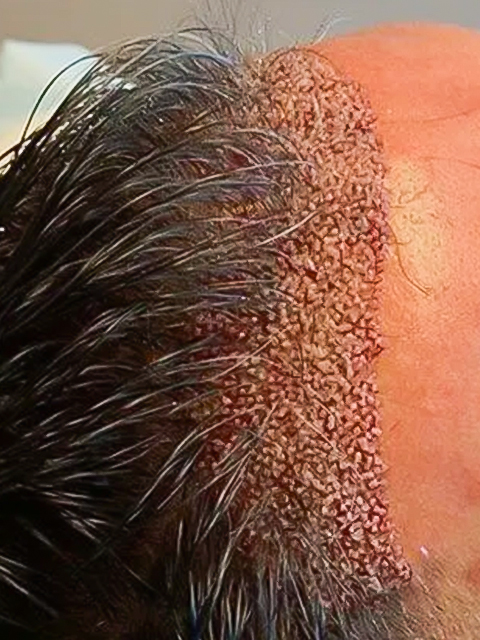
Unshaven hair transplant means implanting grafts from the donor area into thinning areas without shaving your hair. The donor area is either not shaved at all or only a small part is shaved, depending on the number of grafts needed.
The procedure usually takes longer and requires more delicate work than a shaven transplant. It is preferred by people who do not want to cut their hair. A limited number of grafts can be harvested, so it is best suited to smaller, localised areas.
Who Should Choose an Unshaven Hair Transplant?
The unshaven technique suits patients with longer hair who do not want to cut it in the area to be treated. It can be done in two ways.
Partially Shaven Hair Transplant
Only the area where grafts are taken is shaved, so you can keep your hairstyle and length before and after the procedure.
Advantages
Since the procedure is hardly noticeable, you can quickly return to daily life. Fewer grafts are implanted, so recovery is shorter.
Disadvantages
It is only suitable for people with medium or long hair. As the donor area is small, harvesting must be done by an experienced team. It requires more care than other techniques and is therefore more costly, and the number of grafts may be lower.
Fully Unshaven Hair Transplant
Suitable for people with a small area of thinning who need a limited number of grafts. The donor area is not shaved at all and up to around 1,500 grafts are implanted into the planned area.
Advantages of Unshaven Hair Transplant
- A quicker return to social and working life.
- Ideal for people with a small area of hair loss who don’t want to cut their hair.
- Faster recovery.
- No shaving needed at all.
Disadvantages of Unshaven Hair Transplant
- It requires a very high level of experience and skill.
- Only suitable for people with medium or long hair.
- Takes longer and costs more than other techniques.
- As with other techniques, temporary shock loss can occur.